Analysis · Youth Policy
In August 2026 Pakistan adopted two firsts: a National Youth Employment Policy and a National Adolescent and Youth Policy for everyone aged 10 to 29. Together they form what most people now call the National Youth Policy 2026. The direction is right. Whether it changes young lives will depend on delivery in the provinces, measurable targets and young people staying in the room after the launch.
Pakistan is one of the youngest countries in the world. About 67 per cent of its people are under 30, according to the 2023 Population Census, yet the country ranked 162nd out of 193 on the Commonwealth’s Global Youth Development Index 2023 [3]. For years, policy for young people was spread across ministries, provinces and short-term schemes. August 2026 changed that. For the first time, Pakistan has a national framework for young people as a whole, and a dedicated policy for the issue they raise most often: jobs.
National Youth Policy 2026: key facts
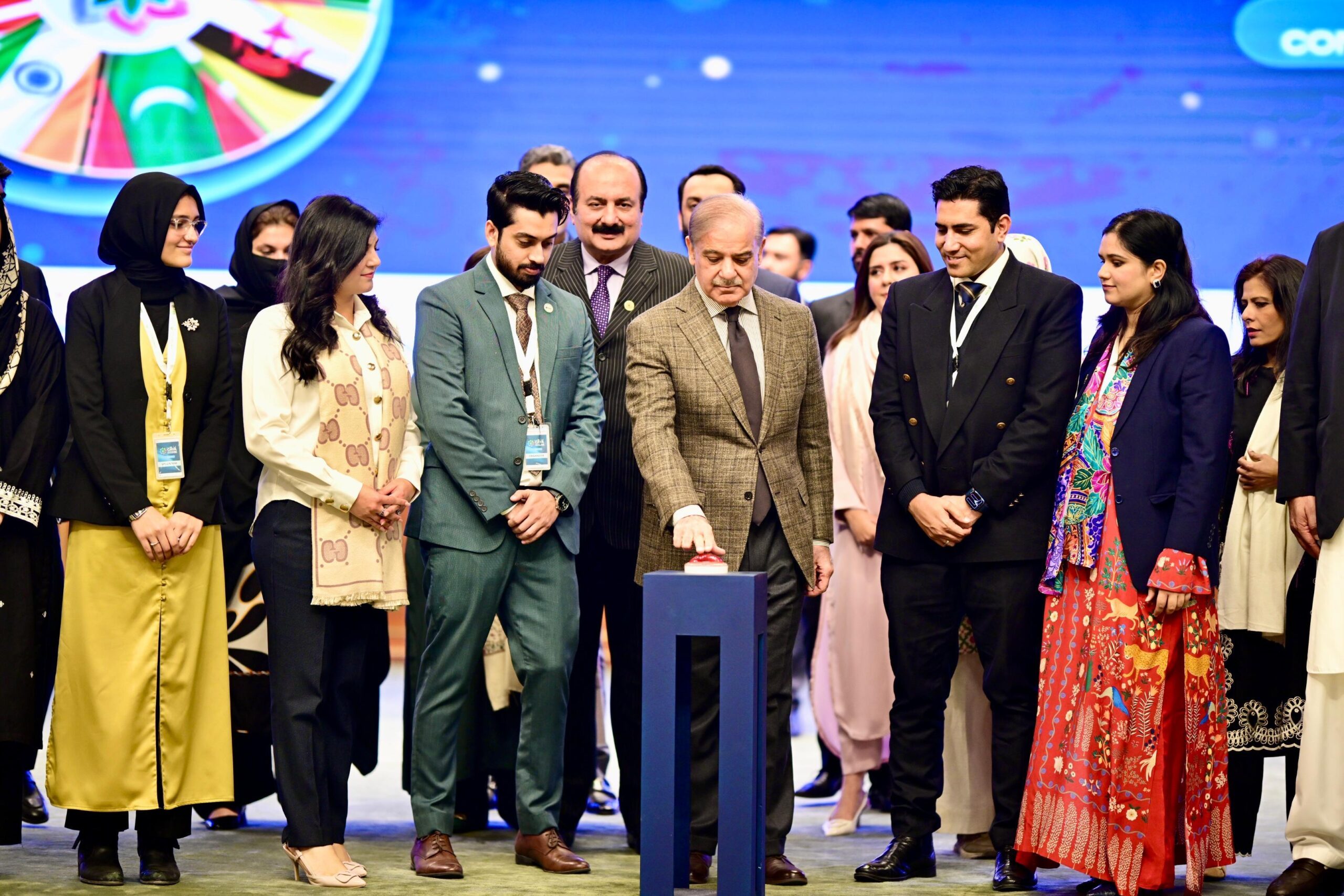
- 12 August 2026: on International Youth Day, Prime Minister Shehbaz Sharif launched Pakistan’s first National Youth Employment Policy in Islamabad [1][2]
- 35% quota for women in the labour force under the employment policy, and at least 10% for startups [2][4]
- Goal: halve the number of young people not in education, employment or training (NEET) by 2030 [5]
- August 2026: the federal cabinet approved in principle the National Adolescent and Youth Policy, covering everyone aged 10 to 29 [6][3]
- Framework: the “4Es” of Education, Employment, Engagement and Environment [7]
- New bodies: a Pakistan Youth Development Council and a Federal Adolescent and Youth Agency [6]
- Built with: more than 32,000 surveys and the views of over 200,000 young people [6], with technical support from UNICEF [3]
One name, two policies
Much of the coverage has used “National Youth Policy 2026” as a single label, and some reports of the 12 August launch used that name [8]. In practice, two complementary policies were adopted that month, and it helps to understand them separately.
- The National Youth Employment Policy is about work: creating jobs and entrepreneurship opportunities for young people [1].
- The National Adolescent and Youth Policy is the wider framework: education, employment, engagement and environment for everyone aged 10 to 29 [3][7].
The National Youth Employment Policy
The Prime Minister launched the employment policy at an International Youth Day ceremony in Islamabad on 12 August 2026 [1][2]. Its headline commitments are a 35 per cent quota for women in the labour force covered by the policy and at least 10 per cent for startups [2][4]. Its most ambitious goal is to halve the number of young people who are not in education, employment or training by 2030 [5].
Implementation began quickly. At a review meeting on 18 August, the Prime Minister directed that progress be reviewed every month, with particular attention to women and to young people in Balochistan and Khyber Pakhtunkhwa [4]. For the labour market data behind this policy, see my analysis of youth unemployment in Pakistan.
The National Adolescent and Youth Policy
Days later, the federal cabinet approved in principle the National Adolescent and Youth Policy, which the Prime Minister described as a significant step toward empowering the country’s youth [6]. Its full title is A National Framework for Empowering Pakistan’s Young Generation [3].
Who it covers
It is Pakistan’s first national policy to bring adolescents and youth together, recognising everyone aged 10 to 29 as one group [3]. That matters because the choices that shape a working life, staying in school, learning a skill, finding a first job, begin well before 18.
The 4Es framework
The policy was designed and consulted on around four pillars: Education, Employment, Engagement and Environment [7]. It is the same 4Es structure the Prime Minister’s Youth Programme uses across its initiatives, including the Digital Youth Hub [7]. (One report of the cabinet decision listed “inclusion” in place of “engagement” [6]; the final published text will settle the wording.) The framework is explained further in PM Youth Programme: the 4Es explained.
Priorities added by the cabinet
Cabinet members asked for several priorities to be strengthened before final adoption [3]:
- values, ethics and character building;
- youth participation in sports and culture, with facilities to match;
- quality education, including bringing out-of-school children into the system and fast-tracking those who are over-age at primary level;
- welfare, education and training for young people in agriculture;
- stronger youth councils in local government; and
- joined-up implementation across federal, provincial and local governments.
New institutions to deliver it
To implement the policy, the government is establishing a Pakistan Youth Development Council and a Federal Adolescent and Youth Agency [6]. These two bodies deserve the closest attention, because they will decide whether commitments become budgets, programmes and results.
How it was made: consultation at scale
The youth policy was built through one of the widest youth consultations Pakistan has run. Sessions were planned in 25 cities, reaching universities, colleges, vocational institutes and grassroots youth groups [7]. The provinces, Azad Jammu and Kashmir, Gilgit-Baltistan and UNICEF contributed to the framework [9], and more than 32,000 surveys gathered the views of over 200,000 young people [6].
Why it matters
In my view, three things make these policies significant.
They treat young people as one life course. Covering everyone from 10 to 29 means schooling, skills and first jobs can be planned as one pathway rather than handed between departments, and the employment policy gives that pathway a destination.
They give Pakistan a framework to take to the world. In my work representing Pakistan’s youth internationally, a clear national policy changes the conversation. It shows partner governments and multilateral organisations where Pakistan is heading, and where cooperation on skills, exchanges and employment would make the biggest difference.
They were built with young people, not only for them. The scale of the consultation sets an expectation that young people will stay involved in implementation, not only in drafting.
What will decide whether it succeeds
- Provincial ownership. Much of youth policy, from schools to local youth councils, is delivered by provinces. The cabinet’s call for integrated federal, provincial and local implementation [3] is the right one; provincial action plans will show whether it happens.
- Measurable targets for the wider policy. The employment policy has a clear goal on NEET youth [5]. The adolescent and youth policy would benefit from equally clear, published indicators so that young people and civil society can track progress.
- Reaching those furthest behind. The government itself identifies rural and underserved areas, the skills mismatch, climate change and social exclusion as challenges [3]. Out-of-school children and young women should be the test cases.
- Youth voice after the launch. Stronger local youth councils and a real role for young people in the new council and agency would keep the “for youth, by youth” principle alive.
What young people can do now
- Register on the Digital Youth Hub at pmyp.gov.pk, the government’s one-window platform for youth programmes, to see skills, employment and other opportunities in one place.
- Follow the Prime Minister’s Youth Programme for announcements on the new council, agency and provincial plans.
- If you plan to start a business, read my guide to the PM Youth Loan Scheme.
- Take part in local youth councils and consultations as they are strengthened.
Conclusion: a framework, now the work
For the first time, Pakistan has a national answer to two questions: what the country owes its young people, and how it will help them into work. The frameworks are sound and the consultation behind them was broad. The coming year, as the new institutions take shape, the provinces respond and the monthly reviews report, will show whether August 2026 becomes a turning point for Pakistan’s largest generation. I will continue to follow that progress here.
Sources
- The News / APP, First-ever National Youth Employment Policy launched, 12 August 2026.
- Dawn, Pakistan ‘still far’ from becoming a social welfare state: PM Shehbaz (International Youth Day 2026 event).
- The Express Tribune, Youth policy to unlock demographic dividend, 8 September 2026.
- The Express Tribune, PM Shehbaz calls for effective measures to create jobs for youth, 18 August 2026.
- The Express Tribune, Maiden youth policy (editorial), 17 August 2026.
- The Express Tribune, National Adolescent & Youth Policy approved, 21 August 2026.
- Press Information Department, PR No. 193: nationwide consultations on the National Youth and Adolescent Policy, 21 April 2025.
- Associated Press of Pakistan, Rana Mashhood hosts launch of National Youth Policy 2026, 12 August 2026.
- Associated Press of Pakistan, Provinces unite to empower Pakistan’s youth future: Rana Mashhood, 21 October 2025.
Comments are closed