Youth Exchange · Perspective
International youth exchanges are easy to organise and easy to forget. The ones that matter leave behind friendships, institutional ties and projects that outlast the visit. That should be the test for every exchange Pakistan hosts or joins.
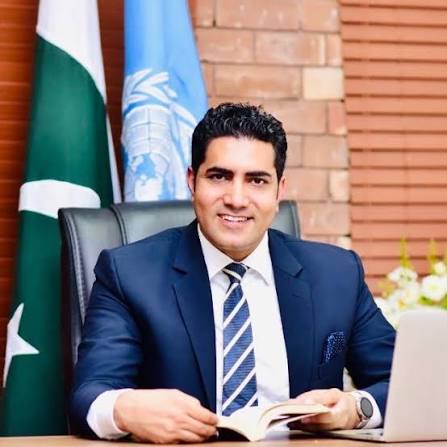
In August 2026 the Prime Minister’s Youth Programme hosted a reception in Lahore for the international youth exchange delegation of SEE Pakistan. International delegates, vice chancellors, educationists and youth leaders attended, among them the heads of Lahore College for Women University, the University of the Punjab, the University of Home Economics and the University of Education, according to the Associated Press of Pakistan.
Welcoming the delegation, I made a point I believe applies to every exchange: young Pakistanis are “not merely the leaders of tomorrow but leaders of today and ambassadors of Pakistan to the world.” That makes exchanges more than cultural courtesy. They are one of the most direct ways a country builds its relationships with the world.
Key points
- Event: Prime Minister’s Youth Programme reception for the SEE Pakistan international youth exchange delegation, Lahore
- Attended by: international delegates, vice chancellors, educationists and youth leaders
- Central message: exchanges should become a foundation for long-term friendships, institutional cooperation and partnerships
- Reported by: Associated Press of Pakistan, 19 August 2026, and republished by UrduPoint
The problem with ceremonial exchanges
Too many exchanges follow the same pattern: an itinerary of visits, a round of speeches, photographs, and then silence. The participants enjoy the experience, but nothing endures. No joint project is launched, no institutional link is formed, and the network of goodwill fades within months. As I told the delegates in Lahore, exchanges should not remain limited to visits or ceremonies. They should become a foundation for long-term friendships, institutional cooperation and stronger international ties.
A simple framework: before, during and after
- Before: agree on purpose. Each exchange should have one or two concrete aims, such as a research collaboration, a joint youth project or a student mobility pathway, agreed between the host and visiting institutions in advance.
- During: design for collaboration, not just observation. Mixed working groups that produce something tangible, even a short policy brief or project plan, build far deeper ties than tours.
- After: institutionalise the relationship. Alumni networks, follow-up calls, memoranda between universities and a named contact on each side keep connections alive once the delegation has gone home.
What exchanges should build
The pillars of youth development I highlighted in Lahore are education, digital skills, artificial intelligence, entrepreneurship, innovation, research and international exposure. Exchanges can advance every one of them, but only if they are linked to institutions that can carry the work forward. The presence of four vice chancellors at the reception was a reminder that Pakistan’s universities are natural anchors for that work.
Exchanges also run in both directions. I invited the visiting delegates to experience Pakistan’s culture, hospitality, diversity and history, and the potential of its young generation. Visitors who leave with an accurate, positive picture of Pakistan become ambassadors in their own countries, a quiet but valuable form of public diplomacy.
Conclusion
Pakistan does not need more exchanges for their own sake. It needs exchanges that are designed to leave something behind: a partnership, a project, a network. Judged by that standard, every delegation we host is an investment, and every young Pakistani who travels abroad is a potential bridge. The task for programmes, universities and youth organisations alike is to make sure those bridges are built to last.
Sources
- Associated Press of Pakistan, Youth engagement vital for stronger international connectivity: PMYM’s coordinator, 19 August 2026.
- UrduPoint, republication of the APP report.
Comments are closed